


Dario Amodei and the rise of Claude
Anthropic did not win by acting like the loudest lab in AI. It won by making safety, steerability, governance, and product reliability feel like one coherent commercial system.
Read this as a founder story, but also as a market-structure story. The useful question is not whether Claude became popular. The useful question is why this product became strategically important without relying on the loudest brand voice in AI.
Anthropic’s real advantage is that its research direction, governance design, product behavior, and public narrative all reinforce one another. That coherence is what gives the company unusual trust density in a crowded category.
Trust became the product surface
Anthropic’s story is unusual because its research discipline, founder narrative, governance structure, and commercial positioning all point in the same direction.
Less noise, more reliability, clearer institutional trust.
Dario Amodei turned scientific seriousness into market differentiation.

Go Fund Project editorial view: this article should read like a founder essay, not a SaaS landing page. The point is to create intellectual clarity, not UI noise.
The thesis before the biography
There are at least two easy ways to misunderstand Dario Amodei. The first is to see him as just another AI founder who happened to be early. The second is to frame Anthropic as simply the safe AI company in contrast to louder, faster rivals. Both readings miss the real story.
Amodei is not merely an executive riding the biggest technology wave of the decade, and Anthropic is not a branding exercise in caution. The deeper truth is that he helped define the modern large-language-model era from inside OpenAI, then left to build a company around a harder thesis: safety, steerability, and institutional trust are not brakes on frontier AI. They are part of the product itself.
That thesis matters more in June 2026 than ever. Anthropic has publicly confirmed its draft S-1 filing. Claude is embedded in serious coding and enterprise workflows. And the company continues to publish governance and model-behavior frameworks that very few high-growth labs would voluntarily make this legible.
- On June 1, 2026, Anthropic disclosed that it had confidentially submitted a draft S-1 to the SEC for a proposed IPO.
- Claude Sonnet 4.6 strengthened Anthropic’s case in coding, long-context work, and agentic workflows.
- The company’s governance structure remains unusually legible to buyers who care about security, policy, and institutional reliability.
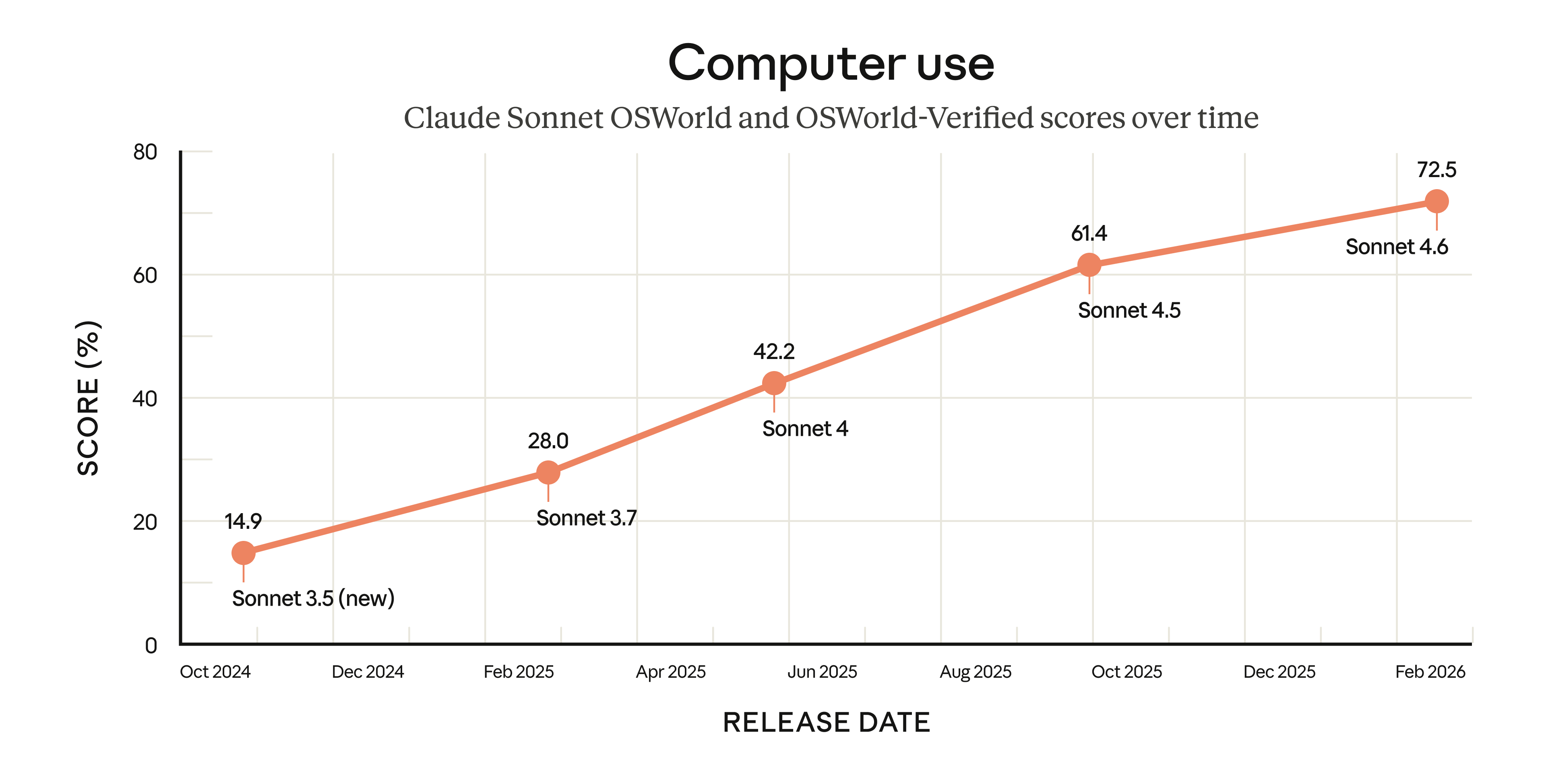
This matters less as a raw score chart and more as evidence that Anthropic kept compounding model quality across longer, more operational tasks where trust actually matters.
The five moments that made the company legible
-
2021
Anthropic is founded by Dario Amodei, Daniela Amodei, and former OpenAI researchers around a different thesis for frontier AI.
-
October 2024
Machines of Loving Grace clarifies how Amodei thinks about scientific upside, acceleration, and guardrails.
-
January 22, 2026
Anthropic publishes Claude’s new constitution, making model behavior and training philosophy more public and more legible.
-
February 17, 2026
Claude Sonnet 4.6 launches with stronger coding, agent work, long-context positioning, and more visible commercial confidence.
-
June 1, 2026
Anthropic confirms it confidentially submitted a draft S-1 to the SEC, signaling a new stage of institutional maturity.
From physics and biophysics to model behavior
Dario Amodei’s background matters because it explains the unusual shape of his leadership. According to his official biography, he previously served as Vice President of Research at OpenAI, worked at Google Brain as a Senior Research Scientist, earned a doctorate in biophysics from Princeton, and later held a postdoctoral role at Stanford University School of Medicine. The Hertz Foundation profile adds another layer: his work moved across statistical mechanics, neural circuits, and biological systems.
That matters because Anthropic’s language about interpretability, steerability, and safety sounds structurally different from the more casual claims many technology companies make. For Amodei, intelligence is not a vague magic trick. It is a system that scales, displays emergent behavior, and becomes powerful before we fully understand it. That worldview fits naturally with a founder trained in hard sciences that reward abstraction and systems thinking.
Biographical accounts also suggest that personal loss shaped his sense of urgency. In stories about Amodei’s early life and academic trajectory, one theme returns: the pace of science is not abstract. If discovery moves too slowly, real people pay the price. That helps explain why his public writing refuses both shallow optimism and shallow doom. He argues for acceleration with guardrails.
Founder pattern: Claude’s calmer, more controlled product identity feels consistent with the founder’s research-first background. That consistency is not cosmetic. It is part of the brand.
The OpenAI years and the split that changed the industry
Amodei’s official biography states that at OpenAI he led development of models such as GPT-2 and GPT-3, and that he was also a co-inventor of reinforcement learning from human feedback. Those are not background details. They place him inside the core technical and product architecture of the modern generative AI boom.
That history clarifies the significance of Anthropic’s founding. The company was established in 2021 by Dario Amodei, Daniela Amodei, and a group of senior former OpenAI researchers. In Silicon Valley, spinouts happen constantly. Anthropic mattered because it was not just talent mobility. It was a different theory of what frontier AI companies are supposed to optimize for.
Anthropic did not emerge as a generic rival lab chasing the same roadmap. It emerged from a disagreement over how aggressively capabilities should be pushed, how risk should be managed, and what kind of institutional structure is necessary when models become powerful enough to affect national security, critical infrastructure, and knowledge work at scale.
“The strongest founders do not just make a product. They make a worldview commercially legible.”
Go Fund Project editorial synthesis
Why Anthropic’s structure became commercial leverage
Most founder stories focus on launches, fundraising, and growth curves. Anthropic’s more interesting move may be organizational. On its official company page, Anthropic describes itself as a Public Benefit Corporation whose purpose is the responsible development and maintenance of advanced AI for the long-term benefit of humanity. That is not cosmetic language. It sits alongside one of the most unusual governance structures in modern technology: the Long-Term Benefit Trust.
This matters for business reasons as much as ethical ones. Enterprise buyers do not just evaluate raw model output. They evaluate governance, predictability, security posture, and the credibility of the people making the underlying decisions. Anthropic’s structure helps the company sell a specific promise: not that it will never move fast, but that it is trying to align speed with institutional restraint.
| Layer | What Anthropic built | Why it matters commercially |
|---|---|---|
| Research | Constitutional AI, steerability, interpretability work | Creates a clearer story for reliability and controllability in professional use cases. |
| Governance | Public Benefit Corporation plus Long-Term Benefit Trust | Signals seriousness to institutions that care about operational risk, not just output quality. |
| Product | Claude positioned for coding, context-heavy work, and agent tasks | Builds loyalty around consistency over long workflows rather than one-off flashes of brilliance. |
| Narrative | Founder essays and unusually transparent public framing | Makes the company easier to understand for customers, partners, and policymakers. |
Constitutional AI and the making of Claude
If Anthropic’s governance is the institutional expression of its philosophy, Constitutional AI is the technical expression. Anthropic’s 2022 research paper on Constitutional AI described a method for training a more harmless assistant using a written set of principles instead of relying only on large volumes of human preference labels. Later, Anthropic made that philosophy more legible to the public through posts such as Claude’s Constitution and Claude’s new constitution.
That update matters because it shows Anthropic does not treat model values as a frozen artifact. The constitution is presented as a foundational document that shapes Claude’s behavior and clarifies the company’s intentions. In practical terms, this is part of why Claude became attractive to users who wanted a model that felt consistently useful, less erratic, and easier to trust in professional environments.
The phrase Constitutional AI can sound abstract, but its product implication is simple: Anthropic wanted model behavior to be more coherent and more legible. That does not eliminate failures. No serious company can promise that. But it does create a tighter link between research philosophy and user experience.
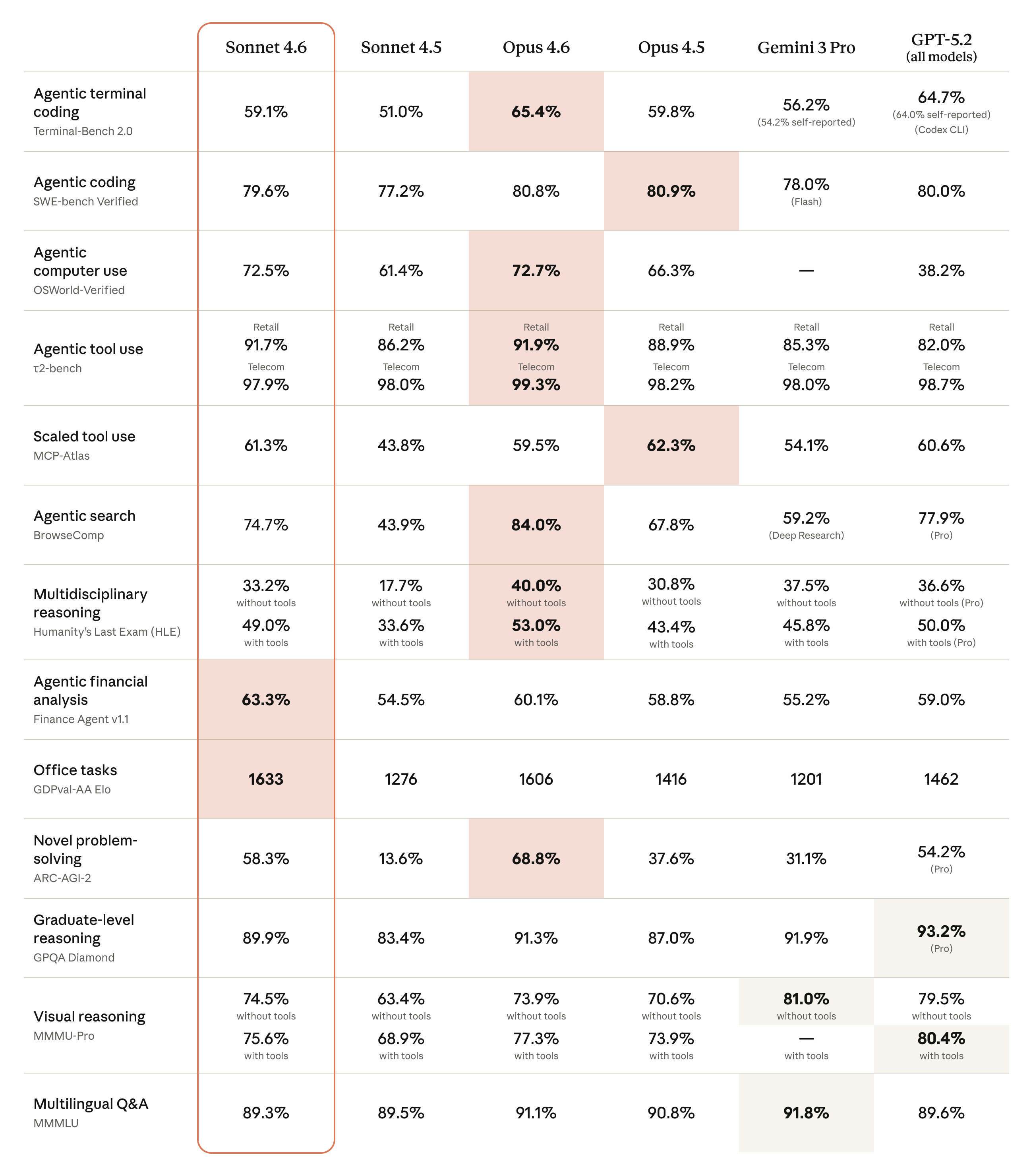
Benchmark leadership is not the whole story, but it helped Anthropic prove that its governance-heavy reputation did not come at the cost of frontier usefulness.
Claude’s breakthrough was workflow trust
Claude’s rise did not happen in one moment. Early models established Anthropic as a serious alternative to OpenAI, especially among users who cared about lower hallucination rates, long-context work, and generally more reliable behavior. But by 2025 and especially 2026, the story shifted from credible alternative to frontier product with its own strengths.
The clearest official signal came with the February 17, 2026 release of Claude Sonnet 4.6. Anthropic described it as its most capable Sonnet model yet, with improvements across coding, computer use, long-context reasoning, agent planning, knowledge work, and design. The company also stated that Sonnet 4.6 includes a 1M token context window in beta and became the default model in Claude for Free and Pro users.
The most revealing part of the launch material is not just the scores. It is the use-case framing: agentic coding, navigating spreadsheets, filling multi-step forms, reading enterprise documents, and working through larger codebases with fewer rounds of correction. Claude’s success is not that it can answer a question. It is that users increasingly trust it to hold together over medium- to long-horizon tasks where consistency matters as much as brilliance.
What changed: in many AI products, the wow moment is the first minute. In Claude, the wow moment is often the second or third hour.
Why Dario Amodei’s writing matters to Claude’s story
Founder stories often separate the thinker from the operator. With Amodei, that split does not really hold. His essays have become part of Anthropic’s product strategy because they explain what the company thinks it is building and why. In Machines of Loving Grace, published in October 2024, Amodei argues that powerful AI could radically accelerate human progress in biology, neuroscience, economic development, peace, governance, and the search for meaning.
As of June 2026, that essay reads less like a detached thought piece and more like a roadmap for how Anthropic wants to be understood. The company has expanded its AI-for-science messaging, launched the Anthropic Institute, and continued to connect model progress with real-world institutional questions. That narrative coherence matters because customers, policymakers, and developers increasingly know what Anthropic believes.
Many labs are legible only through product releases. Anthropic is legible through product releases, technical papers, governance design, and founder writing that mostly points in the same direction. In a crowded model market, that is rare.
Project Glasswing and the expansion of Anthropic’s role
If Claude had remained just a workplace writing assistant, the Anthropic story would still be impressive. But in 2026, the company’s role is visibly expanding. On April 7, 2026, Anthropic announced Project Glasswing, describing it as an initiative to secure the world’s most critical software for the AI era in partnership with organizations including Amazon Web Services, Apple, Broadcom, Cisco, CrowdStrike, Google, JPMorganChase, the Linux Foundation, Microsoft, NVIDIA, and Palo Alto Networks.
This is one of the clearest signs that Anthropic no longer wants to be understood only as a model provider. It is positioning itself as a frontier institution at the intersection of AI capability, cybersecurity, public policy, and critical infrastructure.
That sharpens the founder story. Claude’s success is not merely a startup success story in the classic SaaS sense. It is the story of a company trying to prove that trust, alignment, and governance are commercially useful precisely because the stakes of the technology are now too large for improvisation.
What startup operators should steal from this playbook
- Trust can be a product feature. Anthropic did not treat safety and process as overhead. It converted them into buyer confidence, repeat usage, and enterprise comfort.
- Positioning compounds when it is structurally true. The strongest differentiation is not a slogan. It is a pattern of product, governance, and communication choices that all point in the same direction.
- Category leadership often starts with saying no. Anthropic’s governance and constitutional approach looked eccentric at first. Over time, they stopped looking unusual and started looking strategic.
The real meaning of Claude’s success
Claude’s success is not just a model story and not just a founder story. It is the story of a company that turned research philosophy into product behavior, product behavior into institutional trust, and institutional trust into commercial momentum.
Dario Amodei’s path from physics and biophysics to OpenAI to Anthropic helps explain why the company looks the way it does. He appears to view intelligence as something too powerful to be left to improvisation and too important to be slowed by shallow caution. That tension sits at the center of Anthropic.
As of June 15, 2026, the strategy looks increasingly validated. Anthropic has confirmed its draft S-1 filing, Claude Sonnet 4.6 is positioned as a default model for broad use, and the company continues to invest in Constitutional AI, governance transparency, and security initiatives such as Project Glasswing. That combination is what makes the founder story hard to fake.
- Anthropic confidentially submits draft S-1 to the SEC
- Anthropic company and governance page
- Introducing Claude Sonnet 4.6
- Constitutional AI: Harmlessness from AI Feedback
- Claude’s new constitution
- Project Glasswing
- Dario Amodei official site
- Machines of Loving Grace
- Hertz Foundation profile: Dario Amodei
Sources & Further Reading
Frequently Asked Questions
Who is Dario Amodei?
Dario Amodei is the CEO and co-founder of Anthropic, the AI lab behind Claude. A former OpenAI research VP, he left to build a company where frontier capability and safety research advance together rather than in tension.
How did Anthropic turn safety into an advantage?
By making constitutional AI and responsible-scaling policies public commitments, Anthropic became the default choice for regulated enterprises and cautious developers. Trust became distribution: safety positioning opened doors capability alone could not.
What should SaaS founders learn from Anthropic?
That constraints can be positioning. A public, principled stance on the industry’s biggest fear converted skeptics into champions and let a newcomer compete with far larger labs.
Continue Reading: Product-Led Growth & Success Stories
This article is part of our series on Product-Led Growth (PLG): A Detailed Overview. Related reading: