
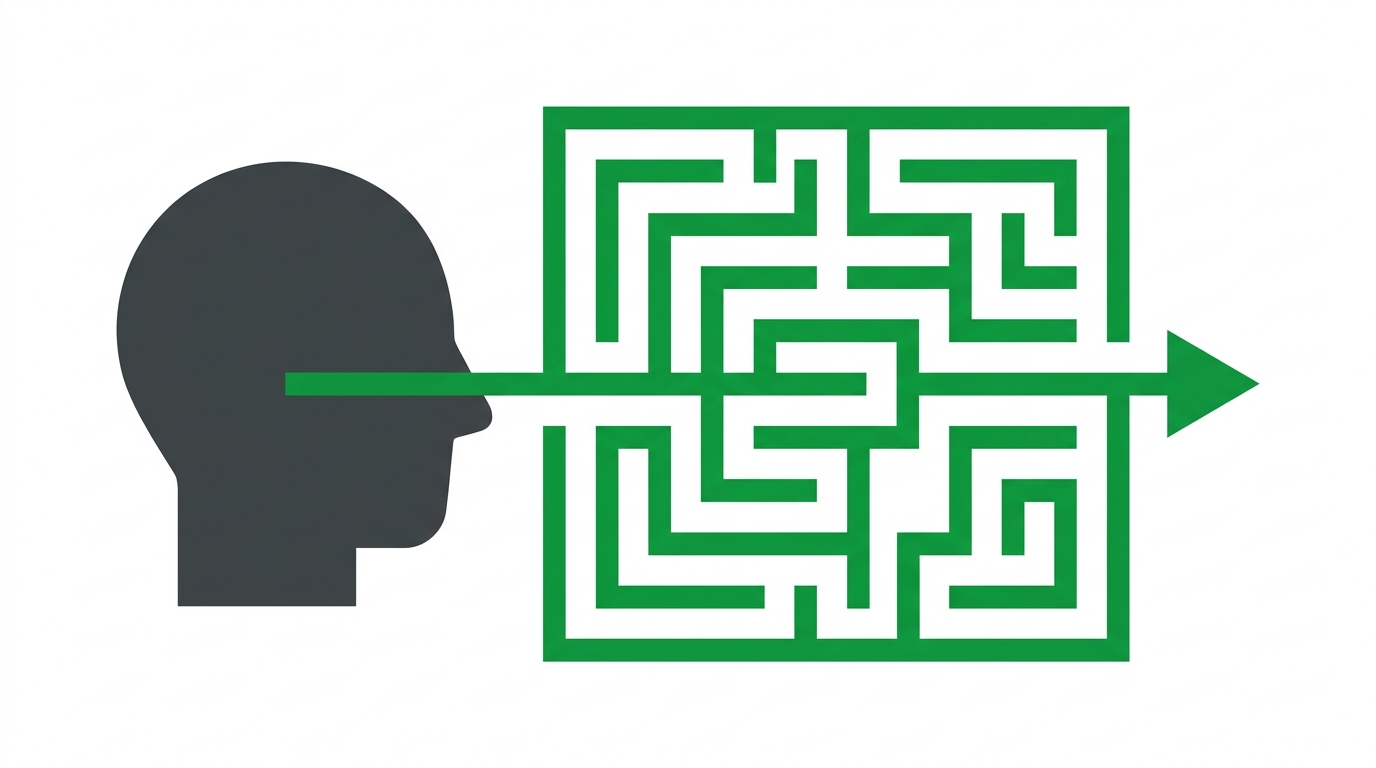

Dopamine farming is the deliberate engineering of a product’s UX to trigger intermittent variable rewards, maximizing user engagement by exploiting the brain's reward prediction error. It is the core engine behind high-retention consumer apps, now aggressively adapted for B2B SaaS to turn utility software into habitual workflows.
The Dark Mechanism
At a neurobiological level, dopamine is not the molecule of pleasure; it is the molecule of anticipation. When a user takes an action, the brain predicts a reward. If the reward is fixed and predictable, dopamine spikes flatten over time (habituation). If the reward is stochastic—variable in timing or magnitude—the Ventral Tegmental Area (VTA) floods the nucleus accumbens with dopamine.
In SaaS, this mechanism is deployed through variable friction, unpredictable notification cadences, and randomized social validation metrics. By decoupling the action from a guaranteed outcome, the product becomes a Skinner box. The user checks the dashboard not because they need to, but because the uncertainty of what they might find generates an anticipation loop.
SaaS Teardown: Slack
Slack didn't just replace email; it weaponized intermittent variable rewards. Email is largely predictable and asynchronous. Slack introduced the "typing…" indicator, the unpredictable ping of the red notification badge, and the variable social reward of emoji reactions.
When a PM drops a message in a Slack channel, they don't know if they will get immediate silence, a threaded debate, or a barrage of rocket emojis. This variability compels users to keep the app open and constantly alt-tab back to it. Slack farmed dopamine by turning workplace communication into a slot machine of micro-validations and urgent unreads.
Execution & Decision Matrix
| User Signal | Execution Strategy | Expected Outcome |
|---|---|---|
| High usage, dropping session length | Introduce unpredictable secondary rewards (e.g., random unlockable features, Easter eggs) | Re-engagement of the anticipation loop |
| Predictable, rote workflow completion | Add variable social validation (peer upvotes, variable badges) | Increased emotional investment in outputs |
| Ignoring static daily summary emails | Shift to stochastic event-triggered notifications | Higher open rates driven by curiosity/FOMO |
| High churn early in user journey | Front-load guaranteed rewards, then transition to variable schedule | Immediate habit formation, sustained via variability |
The Backfire Risk
The primary risk of dopamine farming in B2B SaaS is notification fatigue and deep cognitive burnout. When an app constantly demands attention through false urgency, users eventually recognize the manipulation. This leads to "notification bankruptcy"—users muting all alerts, disabling integrations, or churning to a "calmer" competitor (e.g., the shift from Slack to Twist or Basecamp). Furthermore, aggressive dopamine loops border on dark patterns, risking reputational damage among enterprise buyers who prioritize employee focus over frantic engagement.
Related Reading
- See also: Habit Hijacking for how these loops are integrated into daily routines.
- See also: Emotional Manipulation for leveraging FOMO.
- Reference: Sapolsky, R. M. (2017). Behave: The Biology of Humans at Our Best and Worst. (Analysis of dopamine and anticipation).
- Reference: Skinner, B.F. (1953). Science and Human Behavior. (Foundational texts on variable schedules of reinforcement).
Sources & Further Reading
Frequently Asked Questions
What is dopamine farming in product design?
Dopamine farming means engineering unpredictable rewards, streaks, notifications, and variable feedback, that keep users checking compulsively. It borrows slot-machine mechanics: anticipation, not satisfaction, drives the loop.
Does dopamine-driven design retain users long-term?
Only when the loop delivers real value beneath the thrill. Pure novelty loops burn out in weeks and attract regulators; loops tied to genuine progress, skills, networks, earnings, compound for years.
How do you use variable rewards ethically?
Reward real achievement instead of mere attention, disclose odds where stakes exist, and let users throttle notifications. Engagement you have to trick people into is engagement you will eventually refund.
Continue Reading: Growth Psychology & Behavioral Tactics
This article is part of our series on Cognitive Biases Exploitation: Turning Mental Shortcuts into Sales. Related reading: