
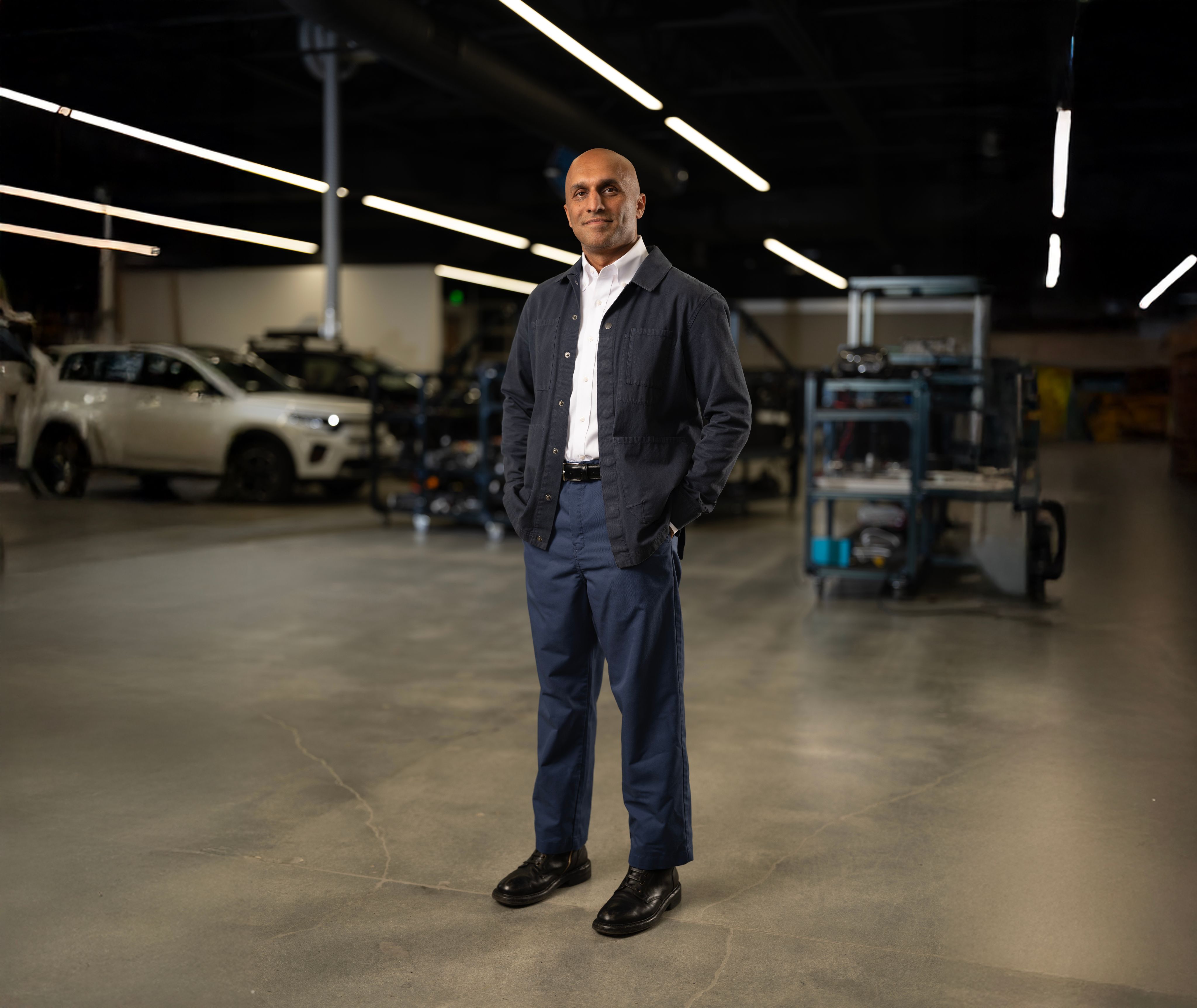

Qasar Younis and the anti-hype path to a $15B machine intelligence company
Applied Intuition did not become strategically important by chasing AI spectacle. It became important by building the software spine for industries where failure is expensive, trust is slow, and real-world performance matters more than narrative momentum.
Infrastructure usually wins after the hype cycle ends
Qasar Younis built a company for autonomy, simulation, defense, trucking and industrial systems long before “physical AI” became fashionable language. That timing now looks less like luck and more like disciplined founder preparation.
Applied Intuition says 18 of the top 20 global automakers and major Department of Defense programs trust its software.
Factory floor realism, product range, startup scar tissue, Google scale and YC operator training.
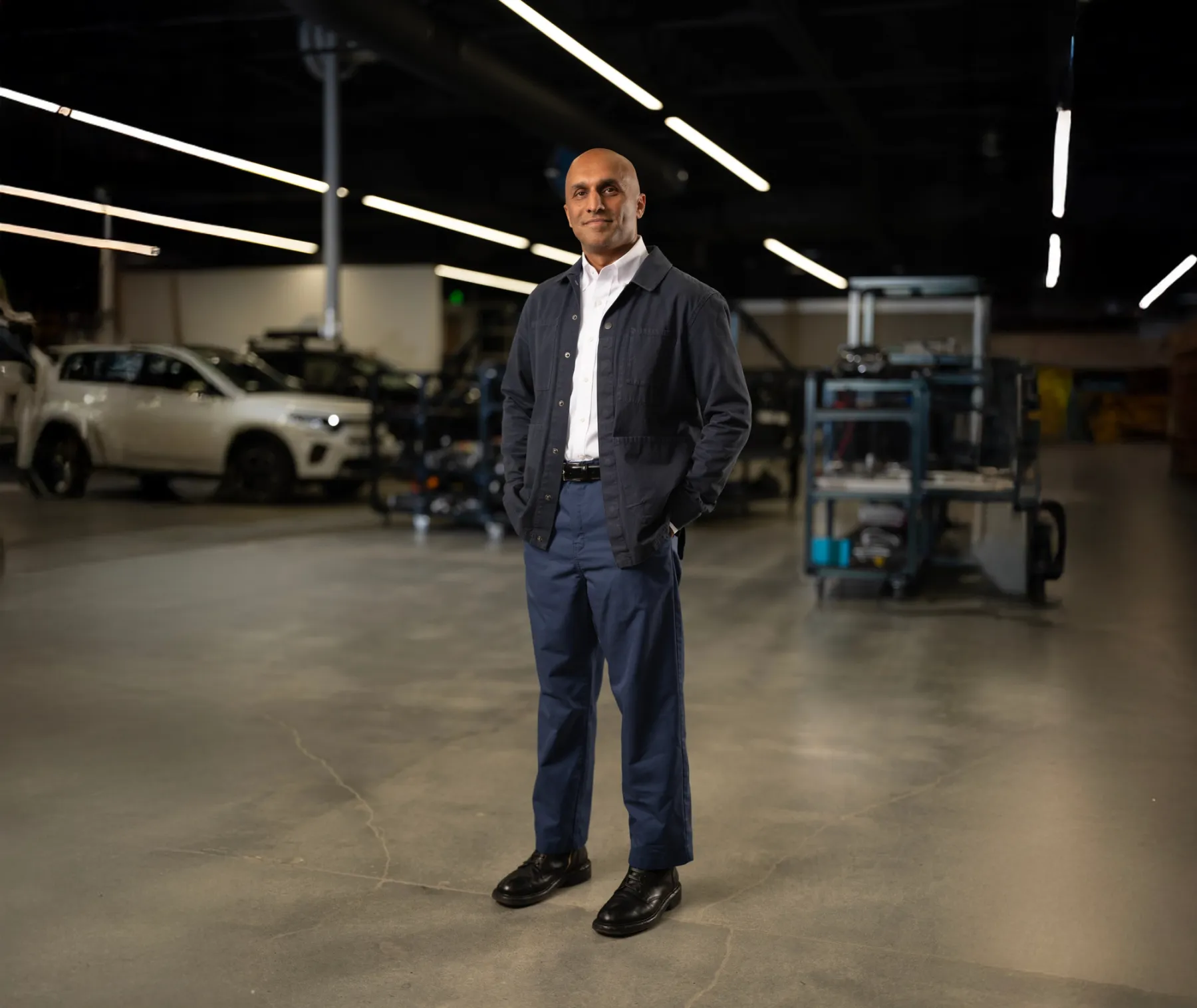
Most AI founder stories are built for visibility. Qasar Younis built for industrial consequence. That distinction is the entire story.
Applied Intuition is not just another AI company with a larger valuation. It is a case study in what happens when a founder spends years becoming unusually broad, then points that range at a market where software has to survive contact with the physical world.
The founder preparation looked indirect until the market caught up
Qasar Younis is easy to underrate if your startup lens is biased toward founders who become cultural symbols early. His path does not flatter that template. It looks broader, slower and less theatrically legible. That is precisely why it became such a powerful setup for Applied Intuition.
In his First Round Review interview, Younis describes growing up in a working-class family in a Detroit suburb shaped by the auto industry. He studied engineering through the General Motors Institute and spent time on factory floors. That background matters for a reason deeper than biography. It trained him in systems where reality is unforgiving. Physical machines do not care how elegant your pitch deck is. They either work, or they do not.
That kind of early conditioning seems to sit beneath everything Applied Intuition later became. Before founding the company in 2017, Younis worked at General Motors and Bosch, built startups, sold TalkBin to Google, worked as a product leader at Google Maps, and later became COO at Y Combinator. On paper, that can look unusually wide. In retrospect, it looks almost perfectly matched to the company he would need to build.
Broad experience only looks inefficient when you cannot yet see the problem it is preparing you to solve.
Why Younis is a more useful founder study than a louder one
Applied Intuition sits at the intersection of autonomy, simulation, industrial workflows, defense programs, AI infrastructure and hard enterprise sales. A founder who only understood product, only understood software, or only understood startups would have struggled to hold all of those layers at once. Younis had already lived across several of them.
Kettering graduate with engineering roots shaped by Detroit and the manufacturing logic of the auto industry.
Early operating years inside automotive and industrial systems rather than pure internet abstraction.
Startup experience, then acquisition by Google, which added both scar tissue and platform-scale product exposure.
Google Maps and then Y Combinator COO created a rare combination of product depth and company-building pattern recognition.
Applied Intuition is founded to build the tooling and intelligence layer for moving machines.
Series F closes at $600 million and a $15 billion valuation, validating the category position years after the original bet.
Applied Intuition matters because it sits under the machine, not on top of the narrative
Many AI companies are competing to own the visible interface. Applied Intuition has spent its energy owning the stack beneath critical machine behavior. That is a slower story to explain, but it is usually the more defensible one.
In its June 17, 2025 Series F announcement, Applied Intuition described itself as the vehicle intelligence company accelerating the adoption of safe, AI-driven machines. The company also said 18 of the top 20 global automakers trust its software, alongside major Department of Defense programs. That sentence is more revealing than the valuation headline. It tells you where the company has chosen to compound: inside programs where buyer trust is difficult to win, switching costs can become meaningful, and software has to survive regulatory, operational and safety scrutiny.
That is why the phrase “physical AI” lands differently here than it does in generic trend pieces. In weaker hands, the category sounds vague and futurist. At Applied Intuition, it is tied to automotive, trucking, defense, construction, mining and agriculture. Those are not speculative sectors. They are industries full of operational friction, expensive mistakes and long decision cycles. If you can build meaningful software leverage there, you are building something far more durable than social excitement.

Before autonomy can be trusted, it has to be tested repeatedly in environments that approximate reality, edge cases and operational failure.
The winner in industrial AI is rarely the team with the best demo. It is the team that can integrate, ship, support and keep earning trust after procurement.
Once the company proves itself in automotive and adjacent systems, the same operating logic can travel into defense, trucking and other machine-heavy verticals.
Infrastructure businesses look quiet until a market wakes up and realizes they sit under many of the outcomes everyone else wants to own.
The anti-hype advantage is not aesthetic. It is commercial.
Applied Intuition does not feel strategically valuable because it avoided hype as a moral gesture. It feels valuable because the markets it serves punish empty narrative faster than software media does. Automotive platforms, defense systems and industrial programs require a level of seriousness that consumer internet instincts often underestimate.
That is where Younis becomes especially useful to study. He appears to have built a company whose tone matches its market. The public posture is measured. The category framing is clear. The ambition is large, but the language is grounded. This is not accidental branding. It is go-to-market alignment.
Founders often assume attention and importance move together. In reality, many of the strongest businesses become operationally important before they become culturally visible. Applied Intuition followed that path. It became embedded in real systems first. The narrative caught up later.
There is a broader lesson here for founders building in infrastructure, enterprise, fintech, defense, healthcare or supply-chain software. Serious markets reward serious posture. They reward understanding the consequences of failure. They reward product teams that can speak to operations, compliance, integration and system-level reliability without sounding like tourists in the problem space.
What founders should steal from this story
Applied Intuition is not only a company story. It is a playbook for a different kind of founder ambition. The non-obvious lessons are better than the valuation headline.
Indirect preparation can become direct leverage. Experience that looks scattered to outsiders can become a moat if the eventual problem requires several disciplines at once.
Choose a category where substance compounds. Some markets reward storytelling quickly. Others reward reliability, systems thinking and trust. The second group is harder, but often more durable.
Match company tone to buyer reality. The way a company speaks is part of product strategy. Industrial buyers do not want theater. They want fluency in risk, integration and operational consequence.
Operational importance is a better target than startup fame. Businesses that become foundational inside important systems can outlast companies that win the media cycle but not the market.
The rise of Applied Intuition is really a story about where AI becomes real
The founder canon is crowded with people who built loud companies. Qasar Younis deserves attention for building an increasingly essential one. Applied Intuition is a reminder that the next important AI businesses may not all look like consumer phenomena or software media darlings. Some will look like infrastructure. Some will live inside vehicle programs, defense systems and industrial operations. Some will win not by dominating attention, but by becoming trusted where the consequences are real.
That is why this story matters now. “Physical AI” is no longer just a phrase investors use to make slide decks feel current. It is becoming a real category fight over who provides the intelligence, tooling and deployment discipline for machines moving through the world. Applied Intuition entered that fight early, and it did so with a founder unusually equipped for the work.
In a decade where many ambitious builders still confuse visibility with leverage, Younis offers a stronger model: become broad, become serious, pick a market that punishes fluff, and compound where trust is expensive. That model is harder to imitate. It is also why the company’s rise looks more durable than most AI stories people are currently talking about.
- Applied Intuition Series F announcement, published June 17, 2025.
- Applied Intuition About page, accessed June 15, 2026.
- First Round Review interview with Qasar Younis.
- Kettering University profile, published May 18, 2026.
Sources & Further Reading
Frequently Asked Questions
Who is Qasar Younis and what is Applied Intuition?
Qasar Younis is the co-founder and CEO of Applied Intuition, which builds simulation and testing infrastructure for autonomous vehicles and machines. Instead of chasing robot hype, the company sells the picks and shovels physical AI cannot ship without.
Why is infrastructure the smarter bet in AI?
Every autonomy program needs simulation, validation, and tooling regardless of whose model wins. Infrastructure revenue compounds across customers while application bets live or die on single breakthroughs.
What is the anti-hype lesson here?
Strategic value accrues to bottlenecks, not headlines. Find the unglamorous layer every ambitious player must pass through, own it completely, and let the hype cycles market your category for free.
Continue Reading: Product-Led Growth & Success Stories
This article is part of our series on Product-Led Growth (PLG): A Detailed Overview. Related reading: