
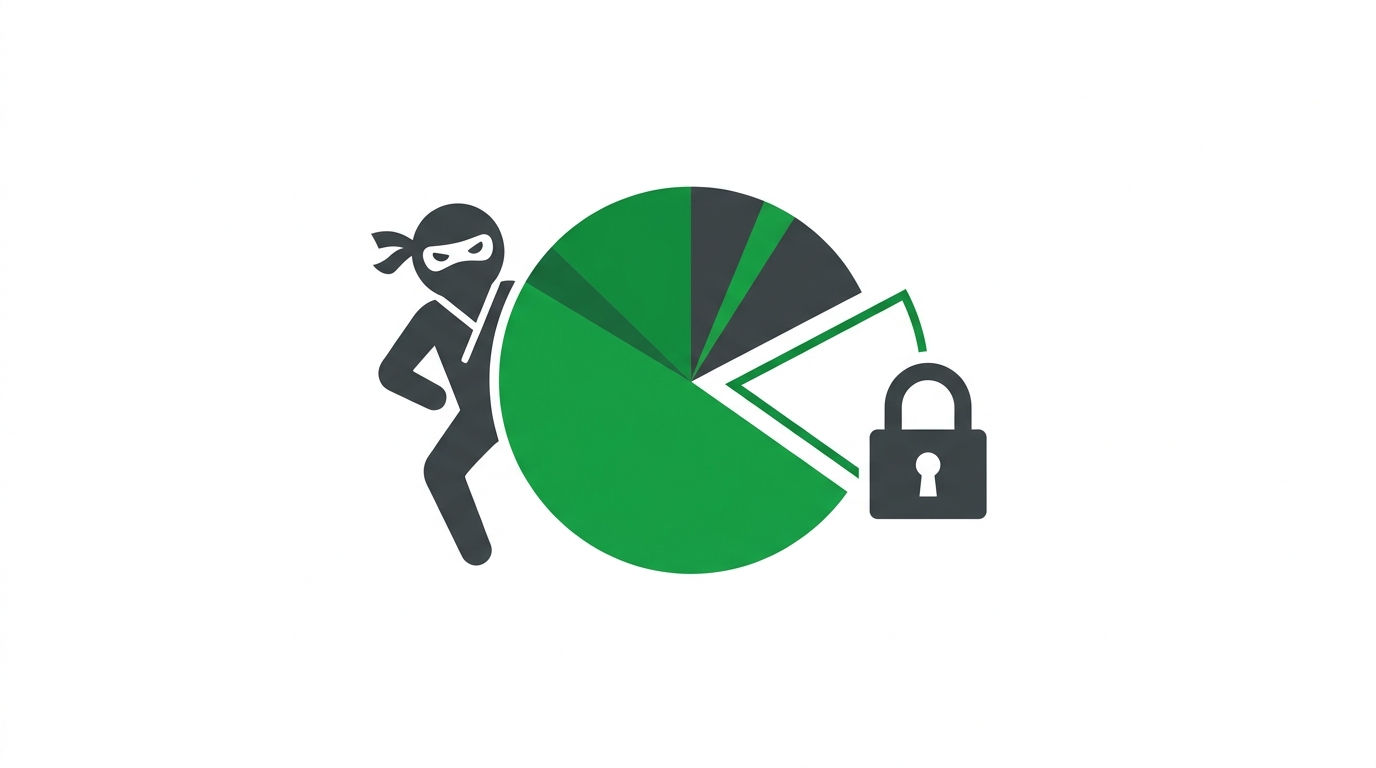

Stealth Segments are cohorts of high-intent, high-budget buyers who do not share a traditional demographic identifier (job title, industry, company size) but share a precise, urgent behavioral trigger or operational pain point.
Because they cannot be isolated using standard LinkedIn Sales Navigator filters or ZoomInfo queries, they remain invisible to lazy marketing teams. Finding them requires tracking intent data, shadow workflows, and alternative digital footprints.
The Dark Mechanism
B2B marketing is optimized for easily queryable data. Marketers target "VP of Sales at Companies with 50-200 employees." The dark mechanism here is Filter Exhaustion. Every competitor is spamming that exact same cohort, driving up CAC and driving down conversion rates to near zero.
Stealth Segments exist underneath these standard filters. They are defined by what they do, not what they are called.
For example, a stealth segment isn't "HR Managers." It is "Companies that just experienced a failed SOC2 audit," or "Founders who just migrated from Stripe to Adyen." By identifying the trigger event or the shadow behavior, you bypass the crowded inbox and arrive exactly at the moment of highest urgency.
SaaS Teardown
Example: Early Slack
Slack didn't launch targeting "Enterprise Communication Managers." They targeted developers and gamers who were hacking together IRC channels to communicate. The demographic was invisible to Microsoft or Cisco, who were selling top-down to CIOs. Slack targeted a stealth segment defined by the behavior of rapid, async code deployment and informal collaboration.
Example: Deel
Before remote work became a ubiquitous demographic filter, Deel targeted a stealth segment: Y-Combinator startups that were hiring engineers in Eastern Europe or LatAm but paying them illegally via wire transfers because they lacked local entities. The title of the buyer varied (CEO, CTO, Head of Ops), but the urgent, painful behavior—running international payroll via SWIFT—was identical.
Execution & Decision Matrix
To operationalize selling into Stealth Segments, you must build non-traditional data pipelines.
| Identifier | Traditional Filter (Crowded) | Stealth Filter (Blue Ocean) | Signal Extraction Method |
|---|---|---|---|
| Role | VP of Engineering | Devs complaining about slow CI/CD | GitHub issue scraping, StackOverflow tags, Reddit r/devops. |
| Growth | Series B Funded | Spiking AWS spend, hiring data engineers | Job board analysis, infrastructure footprint tracking (BuiltWith). |
| Pain Point | "Looking for a CRM" | High churn in sales reps, poor Glassdoor reviews | Sentiment analysis on employer review sites, LinkedIn turnover rates. |
| Tech Stack | Uses Salesforce | Uses Salesforce + 5 custom Zapier workarounds | Forum scraping for Zapier troubleshooting involving specific apps. |
5. The Backfire Risk
Targeting Stealth Segments relies heavily on proprietary data extraction. The main risk is Signal Decay.
The API you use to scrape GitHub issues might change. The job board might obscure hiring data. If your entire GTM motion is built on a single, fragile data pipeline that exposes the stealth segment, your lead flow drops to zero overnight if that pipeline breaks.
Furthermore, false positives are expensive. If your behavioral trigger logic is flawed, you end up doing highly personalized, expensive outbound to completely unqualified leads, burning sales rep morale and capital.
Related Reading
- Shadow Workflows: Secret Tools White-Collar Workers Use
- Blind Spot Markets: Niches Ignored by the Giants
- Intent Data Architecture – Best practices for building proprietary signal pipelines.
Sources & Further Reading
Frequently Asked Questions
What are stealth segments?
Stealth segments are lucrative buyer groups invisible to standard market maps: practitioners without budget titles, teams buying on credit cards, industries analysts don’t cover. They transact constantly while remaining statistically hidden.
How do you find buyers nobody tracks?
Follow the workarounds: community complaints, shadow-tool usage, job posts describing manual processes. Intent data, review-site traffic, and practitioner Slacks reveal demand that firmographic databases miss.
Should you stay stealth after finding them?
Temporarily: exploit the invisibility window to entrench before incumbents notice. But build defensibility meanwhile, because discovery is eventual and attention arrives with competitors attached.
Continue Reading: Hidden Markets & Market Entry
This article is part of our series on White Space Mapping: Finding Gaps in Competitor Maps. Related reading: