
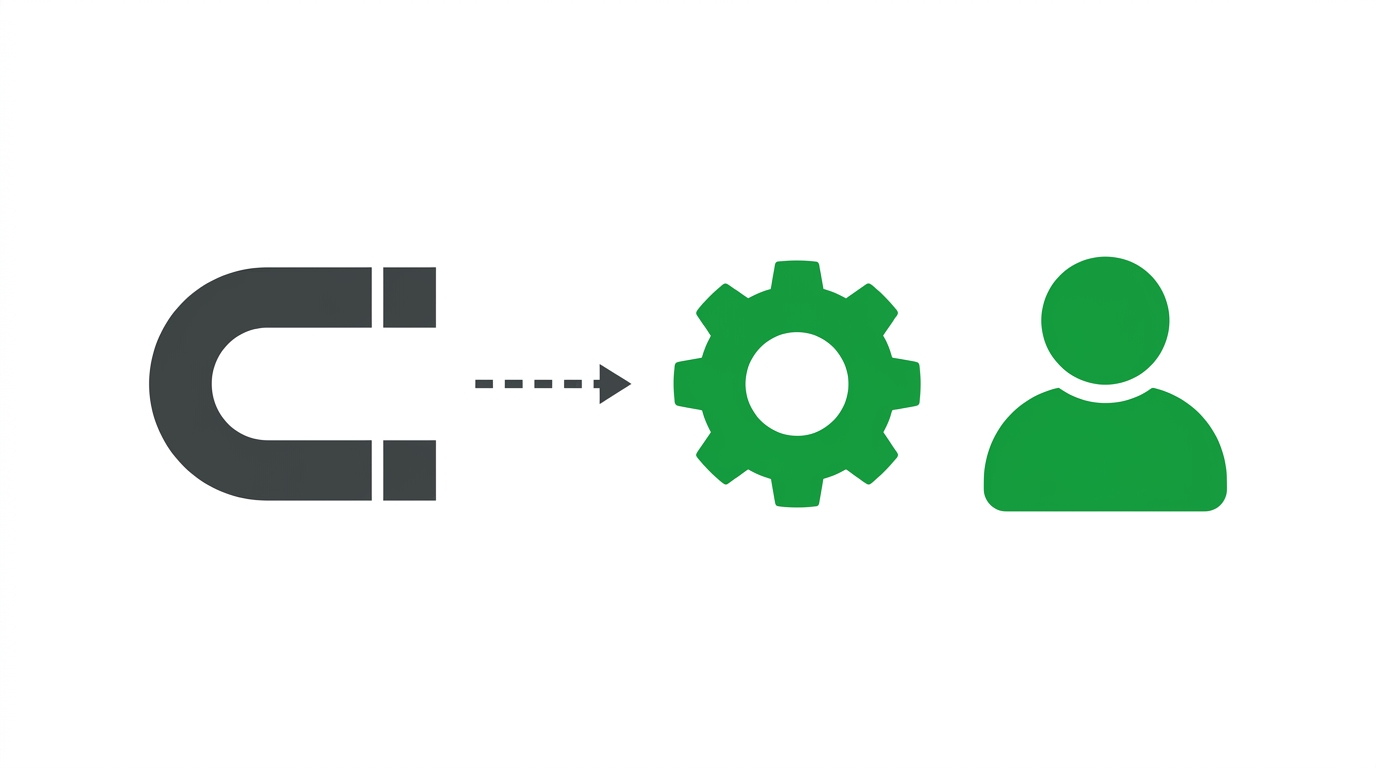

Habit hijacking is the strategic insertion of your SaaS product into an existing, deeply ingrained user routine, rather than attempting to build a new habit from scratch. It relies on co-opting the established cues and rewards of a competitor or legacy system, simply replacing the routine phase with your own tool.
The Dark Mechanism
Human behavior operates on a basal ganglia loop: Cue -> Routine -> Reward. Building a new cue requires massive marketing spend and cognitive effort from the user. Habit hijacking bypasses this by identifying a cue the user already experiences hundreds of times a week.
Psychologically, it exploits the path of least resistance. If a user already opens an email client when feeling disorganized, a SaaS product intercepts that exact moment. By seamlessly integrating into the existing environment (via browser extensions, API hooks, or identical keyboard shortcuts), the new software parasitizes the old habit loop. The brain gets the same reward (e.g., feeling organized), but the software capturing the value has changed.
SaaS Teardown: Superhuman
Superhuman did not try to convince founders to stop using email; they hijacked the Gmail habit. The cue (an overflowing inbox creating anxiety) and the reward (Inbox Zero bringing relief) remained identical.
Superhuman hijacked the routine by overlaying their interface onto the existing Gmail backend and importing all of Gmail's muscle-memory keyboard shortcuts (like 'j' and 'k' for navigation, or 'e' for archive). A user didn't have to learn a new behavior; they executed their exact same habitual keystrokes, but Superhuman delivered the reward milliseconds faster. By hijacking the routine without altering the cue or reward, Superhuman successfully charged $30/month for a habit Google provided for free.
Execution & Decision Matrix
| Competitor Vulnerability | Your Hijack Strategy | Success Metric |
|---|---|---|
| Competitor has high latency / slow loads | Map their exact hotkeys but execute them 10x faster | Time-to-value (TTV) compared to legacy tool |
| Users rely on a static spreadsheet | Build an import tool that converts their sheet to your database in 1 click | Activation rate within first 10 minutes |
| Users live inside a specific ecosystem (e.g., GitHub) | Build a bi-directional sync integration that lives where they already are | Daily Active Integrations (DAI) |
| Competitor UI requires deep menu diving | Surface their most-used feature via a global Command+K shortcut | Feature usage frequency |
The Backfire Risk
If you hijack a habit but fail to deliver the reward faster or better, you trigger intense cognitive friction. Users have zero tolerance for an interrupted habit loop that leaves them frustrated. Furthermore, overly aggressive hijacking—like Chrome extensions that aggressively overwrite default search engines or intercept web requests without clear consent—can trigger security audits from enterprise IT departments and violate compliance boundaries (SOC2/GDPR).
Related Reading
- See also: Dopamine Farming to understand the reward structures.
- See also: Cognitive Biases Exploitation for minimizing the perceived cost of switching.
- Reference: Duhigg, C. (2012). The Power of Habit: Why We Do What We Do in Life and Business.
- Reference: Fogg, B.J. (2009). A Behavior Model for Persuasive Design.
Sources & Further Reading
Frequently Asked Questions
What is habit hijacking in SaaS?
Habit hijacking means attaching your product to routines users already have: the standup, the weekly report, the deployment. Instead of building a new habit from zero, you graft onto existing cue-routine-reward loops competitors or old tools established.
How do you find hijackable habits?
Shadow users for a week and log every recurring workflow touching the problem: spreadsheets opened Mondays, screenshots pasted into Slack, CSVs emailed Fridays. Each repetition is a habit waiting for a better host.
What makes a hijacked habit stick?
Lower friction than the incumbent routine plus a faster reward. If your replacement takes more clicks or delays the payoff, users revert within days no matter how elegant the product.
Continue Reading: Growth Psychology & Behavioral Tactics
This article is part of our series on Cognitive Biases Exploitation: Turning Mental Shortcuts into Sales. Related reading: